History
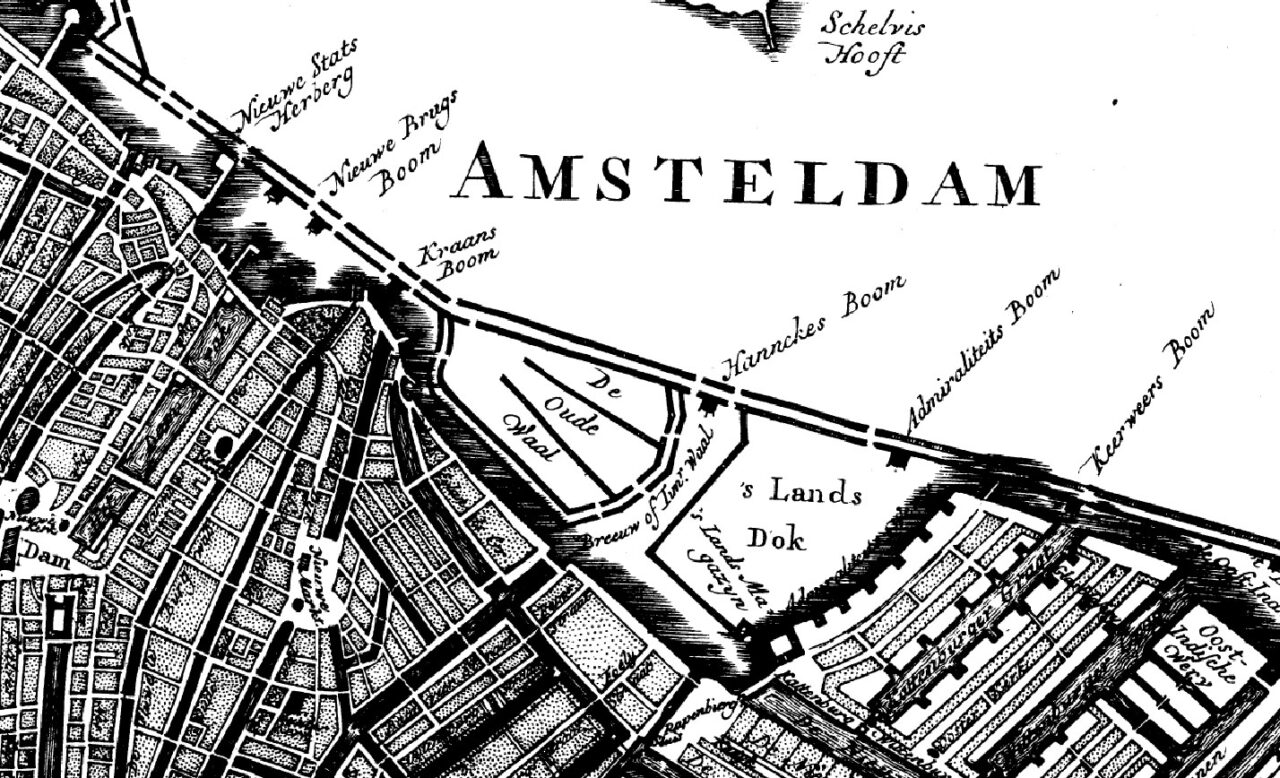
Around 1650 the number of inhabitants of Amsterdam had risen to 200,000, and the canals had been dug out further. The last Singelgracht with the many bastions must protect the city against possible intruders. Access to the city from the north is gained through the guarded openings in the double row of posts so that ships could not simply sail into the city.
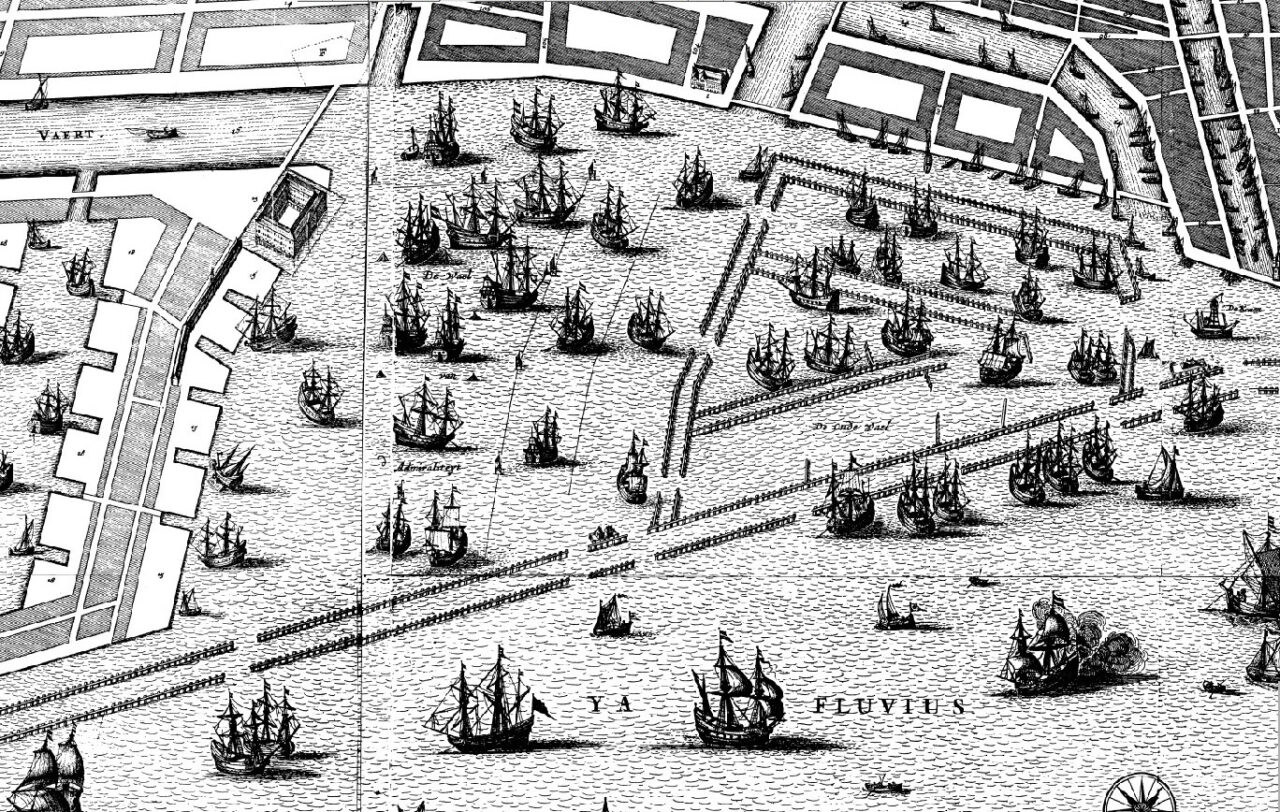
In the guard houses placed on posts (trees), the soldiers and the servants of the Admiralty kept watch over the incoming and outgoing goods. The different openings each had their own name and so there were, to name a few: the Keerweersboom, the Admiraliteitsboom, the Nieuwebrugsboom, the Zoutkeetsboom and: Hannekes Boom! When opening and closing these openings (every evening tree trunks were driven on chains into the openings, to open them again every morning), the “boom clock” was rung.
And those who still wanted to stay in Amsterdam after closing only had a choice between the Tolhuis on the other side of the IJ, or the Nieuwe Stadsherberg…that’s how Hannekes Boom…since 1662…came to be on the map! Stichting Hannekes Boom…since 1662 has turned the Kop Dijksgracht into a nautical quarter again, so that you can wonderfully dream away in this history there.
Hannekes Location
Hannekes Boom is located at a location where almost everyone passes by – by train, boat, bicycle and nearby also by car – yet that spot lay there a bit lost before the arrival of Hannekes Boom.
Stichting Hannekes Boom …since 1662 won the competition from the Municipality of Amsterdam in 2010 to develop a ‘temporary hospitality-plus-something location’ on the Kop van de Dijksgracht; at that time it was a sinister dark spot, where prostitution, wild urination, rubbish on the street, theft, drugs and homeless people were the order of the day.
The location has the character of a frayed edge, a quality that Hannekes Boom utilises, and at the same time the spot is in the middle of the city. This contrast makes the place interesting and is preserved. To maintain this character there is room for improvisation where the terrace and the water play a major role.
Therefore Hannekes Boom offers space to diverse programmes that have in common that they fit this location and the atmosphere of this frayed edge in the city. The programming leaves room open for new initiatives.
Hanneke sees herself as a platform where she helps creatives turn their ideas into reality—ideally without limits, because that’s when the best work happens.
Hannekes Boom adds to the vibrancy and social safety of the area and brings value to Amsterdam and beyond. In a short time, it has become a model for many cities, showing how this kind of urban development can create a place people truly want to visit.
Hannekes Boom has been on the map since 1662… and it has been open again since 2011!
With a large waterside terrace, Hanneke prefers to change things up every week. She hosts a broad creative and cultural programme with activities such as: good conversation, drinks, parties (large and small), creativity, performing arts, food, meeting people, gardening, learning, playing, making art, creation, working, practising a profession, experimenting, technology, reading, water activities, workshops, making music, singing, beer tasting/drinking, sustainability, sports, dancing, wine tasting/drinking, plastic fishing, architecture, football (watching, playing), wine tasting, ice skating, celebrating the seasons, weddings, Gualleria, curling, talks on history, electric charging, exhibitions, enjoying the view, placemaking, parties, open stage, theme festivals, design competitions, boating, swimming, surprises, jam sessions, clean (e‑)mobility, electric boating, innovation, slow food, mooring with the boat, incubator for creation and design, café, restaurant, lounge, food and drink for on the boat, information about boating in and around Amsterdam, boat hire, outdoor cinema, affordable prices, Cradle-to-Cradle, and more…
Hanneke is quite green, with some of the largest trees in the Kop van de Dijksgracht area on its grounds. It offers an extensive cultural programme that can be different every week.
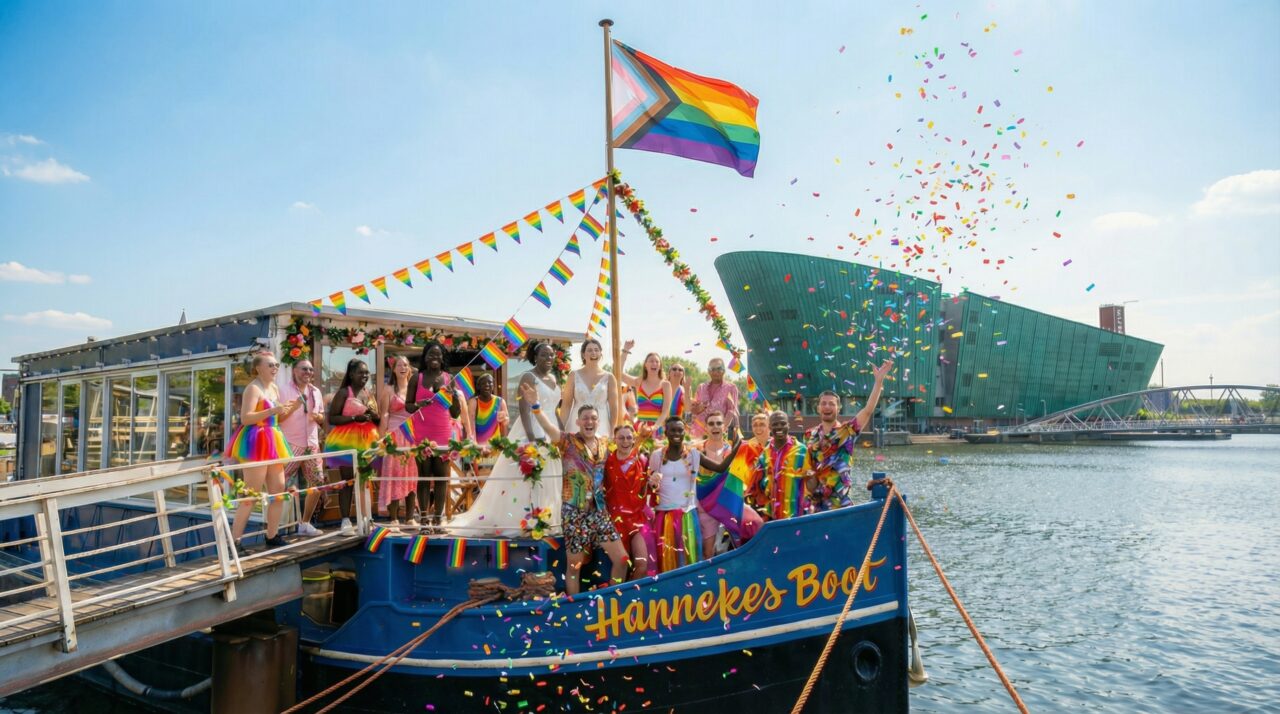
Hanneke has built a charging point for electric transport (Segway, e-bikes, e-boats); it charges various passenger vessels there, including the Zonneboot (Solar Boat), the Cradle-to-Cradle built passenger ship Hannekes Boot, and various private boats.
Hanneke also trains people and provides workspace for dozens of Amsterdam residents.
Hanneke wants more greenery on the largely concrete Kop Dijksgracht; ideally also greenery at ODE and a green underpass under the railway towards the Muziekgebouw aan het IJ. As inspiration, it refers to the widely supported example design of Prinzessinnengarten.
The “boomklok”
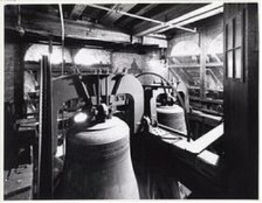
The “boomklok”
Before street lighting existed, the bells were rung to show that from a certain time onward, people could only walk the streets if they carried a lantern. Anyone without a lantern was treated as a criminal.
The “boomklok” told skippers when the boom gates between the IJ and the Damrak were opened and closed, and when the passages were blocked by floating tree trunks on chains, so they knew when they could sail in and out of the city. The bells were also rung at weddings, funerals and other important occasions. They are still rung regularly today, for example when Saint Nicholas arrives.
The Oude Kerk actually has two towers. On top of the crossing of the church stands a second, much smaller tower, which used to house an angelus bell rung during the service at the “Our Father”. In 2006 this old tradition was revived when a new bell was hung in the roof turret above the nave.
Boomklok in the Oude Kerk in Amsterdam (1325) – Hannekes Boom… since 1662
In 1659, four bells were cast by the famous François Hemony. Of these, the largest and the smallest still remain. The other two bells were recast in 1689 and 1771 by Claude Fremy and Pieter Seest respectively.
The first bell weighs 3,700 kg, has a diameter of 1.75 m and strikes the note B♭.
The second bell weighs 1,700 kg, has a diameter of 1.40 m and strikes the note D′.
The third bell weighs 875 kg, has a diameter of 1.17 m and strikes the note F′.
The fourth bell weighs 450 kg, has a diameter of 87 cm and strikes the note B♭′.
Together the bells form the musical “Amsterdam” chord C–E–G–C.